

Global Broker Regulation Inquiry App
About WikiFX
English
简体中文
繁體中文
English
Pусский
日本語
ภาษาไทย
Tiếng Việt
Bahasa Indonesia
Español
हिन्दी
Filippiiniläinen
Français
Deutsch
Português
Türkçe
한국어
العربية
اردو


Fixing the Emotional Mistakes That Lead to Early Margin Calls

WikiFX
|


Abstract:Many beginners blow their first Forex account because they let fear and hope dictate their trades instead of math and strict rules. By understanding common emotional biases and implementing a strict 1% risk limit per trade, you can survive your initial learning curve. The key is to plan every exit before your money is on the line and execute without hesitation.
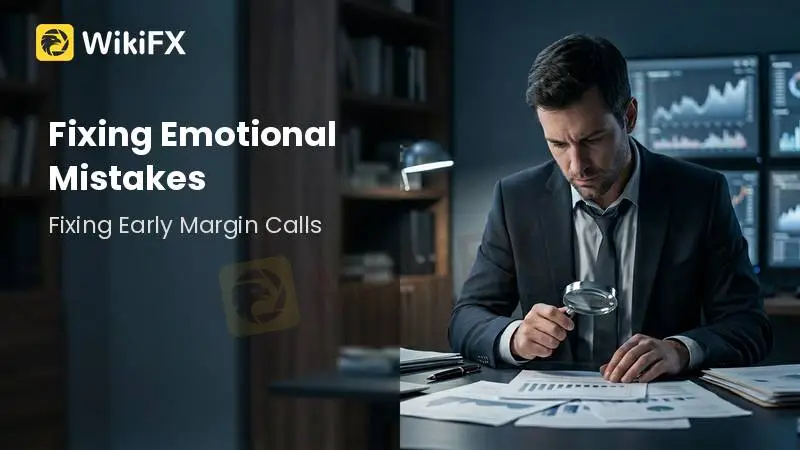
People are drawn to the Forex market by the idea of quick profitability. They open an account, place a few trades, and suddenly find themselves stressing over every minor price movement. Before long, a single bad trade wipes out weeks of progress.
Most beginners blame their strategy or unpredictable market news when this happens. But in reality, the culprit is usually a mix of undetected psychological biases and poor risk management. To survive in the Forex market, you have to realize that trading is not universally suitable for everyone, much like playing the piano at a professional level. It requires a specific, disciplined mindset. If you do not naturally have that mindset, you have to build it manually.
 Contents
Why do beginners hold onto losing trades?
The market exposes human nature, specifically a behavioral flaw called “loss aversion.” In our everyday lives, we hate being wrong and we hate losing. When a beginner buys a currency pair and it immediately drops in value, natural instincts take over. Instead of cutting the loss at a logical level, they hold on. They tell themselves the price will turn around soon.
This stubborn behavior is called the disposition effect, and the market routinely punishes it. On the flip side, when the same beginner sees a small profit on the screen, fear kicks in. They close the trade prematurely just to secure a win, terrified that the market will take their small profit away.
Professional traders do the exact opposite. They cut losers quickly and let their winning trades run. If your market analysis is proven wrong, the most dangerous thing you can do is become a stubborn participant hoping for a miracle. You must learn to take a loss without blinking.
The mathematical reality of surviving the market
The fastest way to drain your initial capital—a situation known as a margin call—is taking heavy positions. Beginners often allocate way too much of their account into a single idea, thinking they need to bet big to win big. When you over-leverage a trade, a normal market fluctuation can force your broker to close your position out of a lack of margin.
To fix this, implement the 1% rule. You should never risk more than 1% of your total capital on any single trade.
If you have a $10,000 account, your maximum risk per trade is $100. You must first decide where your stop-loss will be placed. If the chart dictates a stop-loss distance of 50 pips, you then calculate your trade size so that a 50-pip loss equals exactly $100. Some traders use the Average True Range (ATR) indicator to understand how far a currency pair usually moves in a day, ensuring their stop-loss is placed outside of normal daily noise.
When you only risk 1% on a trade, you remove the panic. You could lose a dozen times in a row and still have plenty of capital left to trade tomorrow.
How can you remove emotion from your execution?
If you want consistent results, you have to act like a machine. This means developing a mechanical trading plan.
A mechanical system means you know exactly how you will handle a trade before you ever click the buy or sell button. You know your entry point, your take-profit target, and your hard stop-loss. Once you are in a live trade, you do not think. You execute the plan. You never ask yourself “what should I do now?” during a live trade, because you already made those decisions when your mind was calm.
For some traders, achieving this level of detachment is too difficult. A common alternative is using an Expert Advisor (EA). An EA is an automated trading software that runs your strategy directly on your platform. It follows instructions precisely and never feels greed or fear. For those who cannot stomach the emotional swings of manual trading, EAs—or even allocating capital to managed funds—handle the execution without the psychological burden.
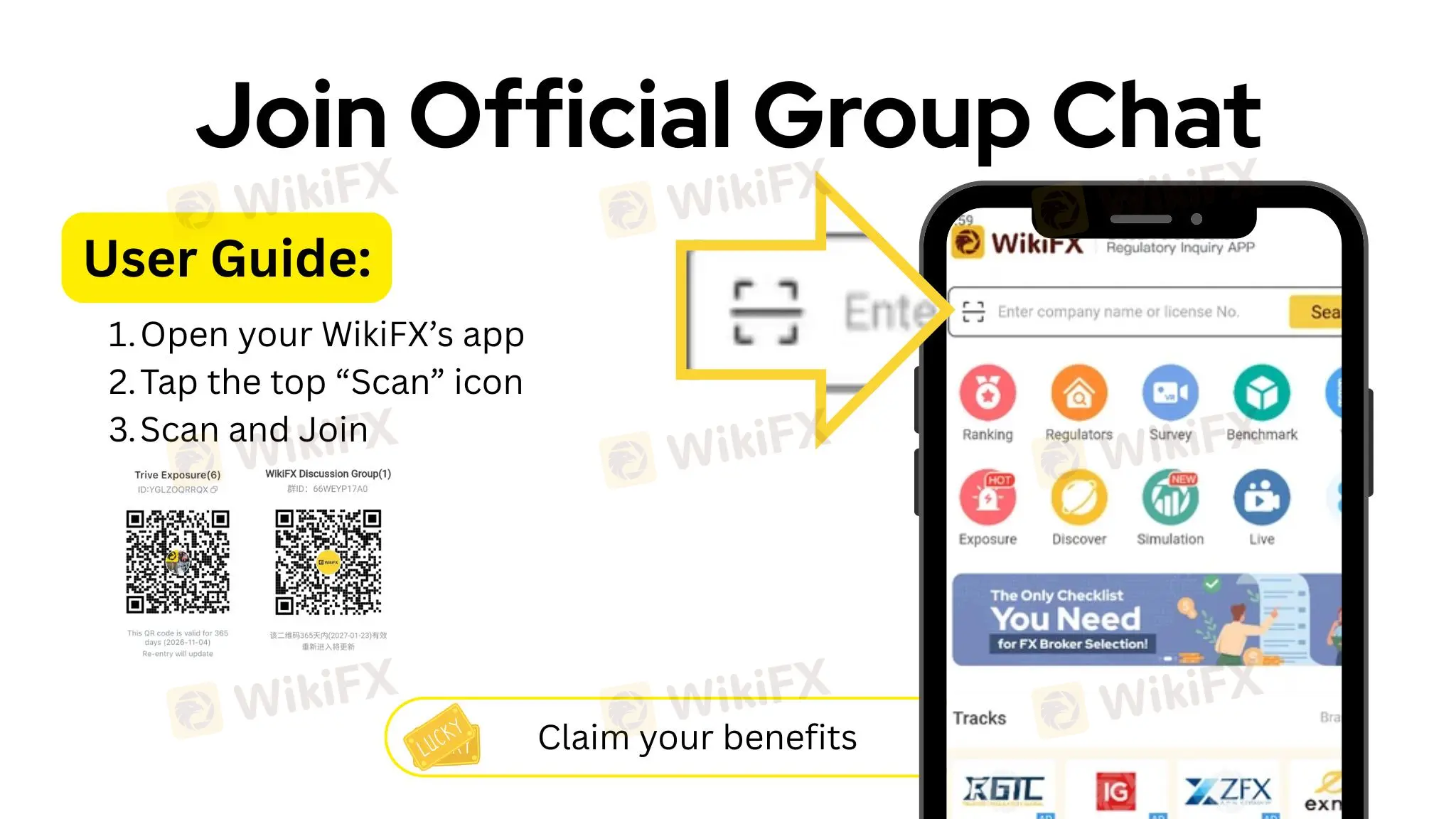
Taking control of your risk and emotions is difficult enough without external distractions. You need absolute peace of mind regarding your trading environment. Before you place your first mechanical trade, look up your broker's regulatory status on the WikiFX app. Confirming that your funds are held with a properly licensed entity removes the background stress of platform trust, letting you focus entirely on your discipline and your charts.

Disclaimer:
The views in this article only represent the author's personal views, and do not constitute investment advice on this platform. This platform does not guarantee the accuracy, completeness and timeliness of the information in the article, and will not be liable for any loss caused by the use of or reliance on the information in the article.
WikiFX Broker
Latest News
FBS Review: Is Your Deposit Safe?
WikiFXPocket Broker Review: Can You Actually Withdraw Your Money?
WikiFXTHINK MARKETS Broker Might Not Want You To See This
WikiFXYAIBroker Review: Website Is Down and Users Report Withdrawal Problems
WikiFXBONUS Review: Is Your Deposit Safe?
WikiFXAlpari Review 2026: Official Warnings and High Complaint Patterns
WikiFXHow to Spot Your First Trial Short on H1 After a Break
WikiFXIG Review: Broker Complaints Collide With Mixed Regulation Signals
WikiFXHow to Lock In Profits and Create a Zero-Risk Trade
WikiFXSTARTRADER Adds SK Hynix CFD Days After $26.5B US Listing
WikiFX