Abstract:Cambodia's banking sector has faced an unprecedented shake up in 2026, with two banks exiting the market in rapid succession. In January, Prince Bank entered liquidation, followed by the revocation of Phatda Commercial Bank's banking licence in February. The back to back developments have sent shockwaves through Cambodia's financial industry, raising concerns among depositors, businesses and foreign investors over the stability of the country's banking system.
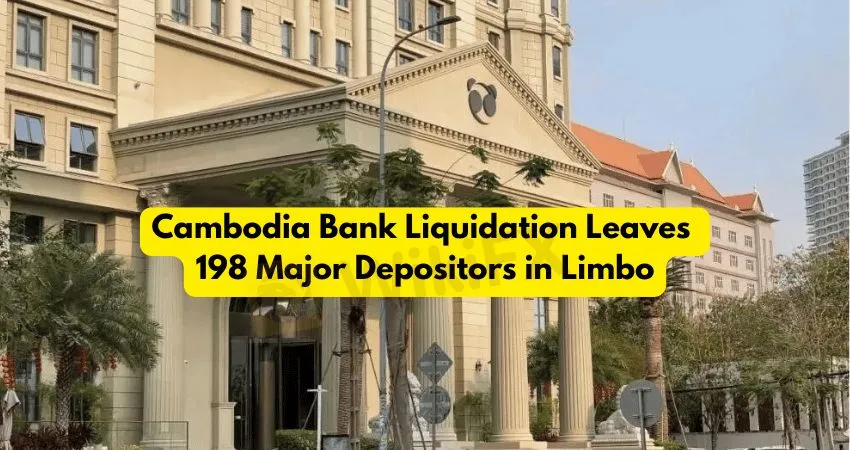
Cambodia's banking sector has faced an unprecedented shake up in 2026, with two banks exiting the market in rapid succession. In January, Prince Bank entered liquidation, followed by the revocation of Phatda Commercial Bank's banking licence in February.
The back to back developments have sent shockwaves through Cambodia's financial industry, raising concerns among depositors, businesses and foreign investors over the stability of the country's banking system.
While Prince Bank has largely completed repayments to depositors, the liquidation of Phatda Commercial Bank remains ongoing, leaving hundreds of customers with significant sums of money still frozen.
For many of them, the issue is no longer whether they will eventually recover their funds, but when.
 Contents
Most Depositors Reimbursed, But Large Accounts Still Await Payment
According to the latest announcement from Morisonkak MKA Co., Ltd., the court appointed liquidator authorised by Cambodia's central bank, approximately 96 percent of depositors are expected to receive their full deposits during the first phase of repayments.
However, 198 large depositors have yet to receive their full balances.
The remaining payments will only be made after additional bank assets are sold and converted into cash, meaning those with larger deposits must continue waiting through subsequent phases of the liquidation process.
For affected customers, the delay has become more than a financial inconvenience. It has disrupted business operations, investment plans and cash flow while creating growing uncertainty over when the remaining funds will be released.
Business Plans Put on Hold
One depositor, identified only as Ms Chen, has operated businesses in Cambodia for many years.
To support her business operations, she maintained US$1.2 million (approximately RM5.1 million) in a current account with Phatda Commercial Bank.
Following the bank's liquidation, she received an initial repayment of US$200,000 (around RM850,000). However, US$1,001,000 (approximately RM4.25 million) remains unpaid.
She said the frozen funds have forced her to postpone plans to purchase land for a new property development project this year.
“The hardest part isn't having to wait,” she said. “It's not knowing how long we'll have to wait.”
According to her, most bank employees have already left following the liquidation, leaving depositors with few avenues for updates.
“Whenever we ask, we're simply told to wait for further notification from the liquidator.”
Depositors Seek Greater Transparency
Ms Chen said most information currently available to depositors comes from official notices issued by the National Bank of Cambodia, the appointed liquidator and Phatda Commercial Bank.
However, she believes the announcements largely focus on administrative procedures rather than meaningful progress updates.
“There are notices about the process, but almost no information about asset sales or a clear repayment timeline,” she explained.
“As creditors, we have very little visibility into how the liquidation is progressing.”
She added that the outstanding large depositors include Chinese investors, Cambodian companies and customers from Europe and other countries.
“At this stage, nobody is asking about interest anymore. Everyone simply wants to know when they'll recover their principal.”
Missed Expectations Increase Anxiety
Another depositor, Mr Liu, is still waiting to recover US$350,000 (approximately RM1.49 million).
He said depositors understand that bank liquidations are legally complex and require time, but communication has remained the biggest concern.
“The liquidator previously indicated that repayments would likely be made in several rounds and suggested the second phase could begin in May,” he said.
“As of 30 June, there has still been no updated schedule or explanation.”
Seeking answers, several depositors visited both Phatda Commercial Bank and the offices of Morisonkak MKA on 11 May.
According to Mr Liu, bank representatives were unable to answer many questions and simply referred customers back to the liquidator.
When depositors approached the liquidator directly to enquire about asset disposals and repayment progress, they also found that very little additional information was available.
On 5 June, representatives of affected depositors met the liquidator again, requesting regular public updates on asset sales, repayment schedules and expected timelines.
“So far, the information remains limited,” he said.
“We understand that selling assets takes time and we're willing to follow the legal process.”
“What we hope to know is how much has already been recovered, when the next repayment will take place and where the liquidation currently stands, instead of waiting indefinitely without a timetable.”
Mr Liu noted that many of the remaining unpaid depositors are business owners, merchants and long term expatriates whose daily operations have already been affected by restricted cash flow.
“Our request is actually very simple. We hope the liquidation process becomes more transparent so depositors can stay informed.”
Foreign Depositors Also Await Answers
Italian depositor Raffaele Ferro told local media that he is still waiting to recover the remainder of his savings from Phatda Commercial Bank.
“I follow the news every day, hoping to see updates on the liquidation,” he said.
While acknowledging that liquidating a bank is a complicated legal process that naturally takes time, he believes authorities could improve communication with affected customers.
“It's not that we cannot wait,” Ferro said.
“We simply want to know how the process is progressing.”
He also believes that any responsibility relating to the bank's collapse should be investigated according to the law.
“A more transparent liquidation process would not only reduce anxiety among depositors but also help preserve confidence in Cambodia's financial system.”
Why Can't Depositors Be Paid Immediately?
Many affected customers have questioned why repayments cannot be completed immediately when the bank reportedly held approximately US$776 million (around RM3.3 billion) in total assets compared with US$502 million (around RM2.1 billion) in deposits.
According to a source familiar with banking operations, the answer lies in the nature of a bank's assets.
“A bank's assets are not the same as cash sitting in a vault,” the source explained.
“The largest portion typically consists of outstanding loans.”
If borrowers have not yet repaid those loans or the loans have not matured, the bank cannot instantly convert those assets into cash.
In addition, the liquidator must complete loan recoveries, auction collateral, dispose of other assets and satisfy legal procedures before additional funds become available for distribution.
For this reason, staged repayments are a common feature of bank liquidation processes worldwide.
Confidence Takes Longer to Rebuild
For the overwhelming majority of smaller depositors who have already received their money, the crisis may soon be over.
For the remaining 198 large depositors, however, the uncertainty continues.
Those interviewed said they understand that asset disposal takes time and are prepared to follow the legal process.
Their biggest concern today is no longer whether they will eventually be repaid, but when the next payment will arrive, how much progress has been made in selling the bank's assets, and whether the liquidation process can become more transparent.
While the liquidation itself will eventually come to an end, industry observers note that rebuilding confidence in Cambodia's banking sector is likely to take considerably longer than selling the bank's remaining assets.