Eightcap Adds Trading Challenges and Plus Access to TradingView Accounts
Eightcap has added simulated trading challenges and TradingView Plus access to its TradingView-linked accounts, subject to regional, account and activity requirements.
معلومات

简体中文
繁體中文
English
Pусский
日本語
ภาษาไทย
Tiếng Việt
Bahasa Indonesia
Español
हिन्दी
Filippiiniläinen
Français
Deutsch
Português
Türkçe
한국어
العربية
اردو

Eightcap has added simulated trading challenges and TradingView Plus access to its TradingView-linked accounts, subject to regional, account and activity requirements.
FXTF has a strong visible safety profile in the available WikiFX data, with a WikiFX Score of 8.38 and regulation by Japan's Financial Services Agency. The main cautions are mixed exposure reports, limited disclosed trading-condition data, platform security gaps such as no two-step login or biometric login, and some serious scam-style complaints that should be verified before depositing.
The 30 minutes before the New York open is notorious for sudden 'fakeouts' that sweep the Asian session's highs and lows. This guide explains why these false breakouts trap beginner day traders and how to use basic support, resistance, and reversal patterns to survive the volatility and find the real trend.

Many beginners get trapped in losing trades because they only focus on a single, short-term timeframe. This guide breaks down a practical top-down approach—using 4-hour, 1-hour, and 15-minute charts—to help you identify the main trend, map the market structure, and execute precise breakout entries without the usual stress.
EMAR MARKETS has South Africa FSCA regulation on record, but its WikiFX Score is 4.40 and the available user exposure cases show repeated withdrawal delays, account blocking, support issues, and profit-dispute allegations. The broker is not presented as unregulated, yet the complaint pattern makes its practical risk level high for traders who cannot afford frozen funds or unresolved disputes.
FBS has regulated entities listed under CySEC and ASIC, but its WikiFX Score of 2.51, regulator disclosures, and a heavy stream of recent withdrawal and slippage complaints make its risk level elevated. The broker may offer familiar platforms and competitive account terms, but traders should verify the exact legal entity before depositing.
LOYAL PRIMUS is listed as regulated by South Africa's FSCA, but its WikiFX score of 4.47, C influence rank, and repeated account-freeze and withdrawal-related exposure cases point to a higher-risk broker profile. Traders should verify the latest certificate and test withdrawals cautiously before committing meaningful funds.

Beginner Forex traders often rely too heavily on lagging indicators to find market bottoms. This article explains how combining zones of support with pure price action offers a clearer view of market reversals. The main takeaway is that indicators should only be used to confirm raw price data, not the other way around.

Intraday Forex trading helps avoid overnight market risks but requires fast, disciplined decisions. This article explains how beginners can use a top-down strategy—aligning the 4-hour, 1-hour, and 15-minute charts—to find clearer trade setups. The main takeaway is that executing on a short timeframe is safer when it matches the longer-term market trend.

Many beginner Forex traders focus purely on trying to win as many trades as possible without managing their underlying exposure. Based on foundational technical analysis principles, this article explains how to build a trading strategy using win/loss ratios, why protecting against 'unlimited risk' is essential, and how basic chart patterns provide objective entry and exit rules. The main takeaway is that managing your risk-to-reward ratio is far more important than simply achieving a high win rate.

This article explains the core concepts of variation margin, stop-loss orders, and risk-to-reward ratios based on the provided material. For Indian beginner traders worried about account blowouts—especially when running smaller balances alongside larger ones—understanding these risk mechanics is more critical than finding the perfect trade entry.
Critical warning: Neuron Markets shows no verified financial regulation, while a 2024 user report alleges a 9-day withdrawal delay and abnormal market moves. For Forex traders, that combination creates a high-risk environment where fund protection is unclear.
BOLD PRIME carries a low WikiFX score of 2.36, no verified financial regulation, and a 2023 Malaysia Securities Commission investor alert for unauthorized capital market securities dealing. User complaints allege blocked withdrawals, frozen accounts, and banned access after payout requests.
ORON TRADE is an unregulated offshore broker registered in Saint Lucia, holding a low WikiFX score of 2.08. While the platform offers local Indian payment methods, multiple Indian traders have reported severe withdrawal blocks and account access issues, making it a high-risk choice.
BotBro is an unregulated broker with a very low WikiFX score of 1.46. While some users claim to receive consistent returns, reports of unauthorized fund withdrawals by account admins present a severe risk signal for Indian traders.
Available records show ActivTrades holds major regulatory licenses, but recent user complaints involving canceled profits and blocked withdrawals signal high risk. Indian traders should exercise caution and verify their specific account entity before depositing.
This Vonway review provides an in depth look at the broker's regulatory standing, WikiScore rating, field survey findings, and user feedback based on data available on WikiFX. As a global broker regulatory query platform, WikiFX evaluates brokers using indicators such as licensing coverage, compliance records, physical address verification, and exposure reports submitted by users.

The WikiEXPO, a leading global fintech industry event, will take place on July 23 in Hong Kong.

June's Consumer Price Index (CPI) report handed financial markets exactly the headline they had been hoping for. Inflation came in well below expectations, energy prices tumbled, and Wall Street briefly exhaled. Yet beneath the surface of what appeared to be a decisive step toward price stability, a more complicated and arguably more unsettling story was unfolding.
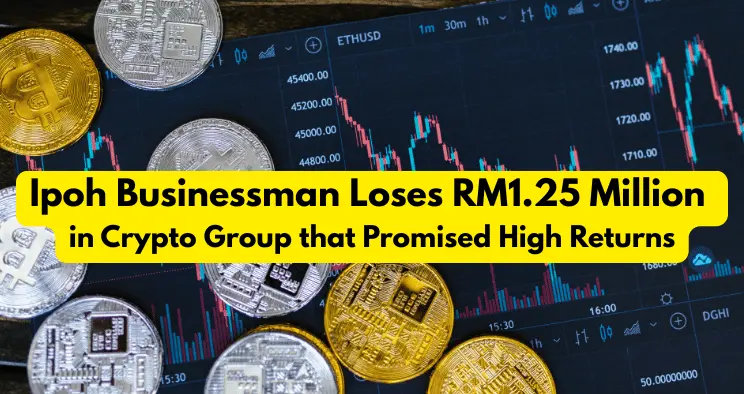
A 45-year-old businessman from Ipoh has become the latest victim of a cryptocurrency investment scam in Malaysia, after losing approximately RM1.25 million to a group of fraudsters who lured him in with promises of extraordinary financial returns.