ATFX to Exhibit at WikiEXPO Hong Kong — Advancing Transparency and Technology-Driven Global Trading
The WikiEXPO, a leading global fintech industry event, will take place on July 23 in Hong Kong.
معلومات

简体中文
繁體中文
English
Pусский
日本語
ภาษาไทย
Tiếng Việt
Bahasa Indonesia
Español
हिन्दी
Filippiiniläinen
Français
Deutsch
Português
Türkçe
한국어
العربية
اردو


The WikiEXPO, a leading global fintech industry event, will take place on July 23 in Hong Kong.
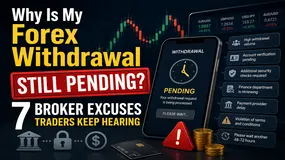
Withdrawal delays are precisely the complaint we keep receiving on WikIFX, a veteran in the forex regulation inquiry space. While some users receive withdrawal access initially and find rejections on their applications later, some fail to receive a single approval. Some delays usually result from genuine compliance requirements that brokers need to adhere to. However, in many cases, traders have accused the broker of repeated excuses as part of its alleged strategy to deny a seamless fund release. A pending withdrawal cannot be an outright indicator of fraudulent activity. Financial institutions, including forex brokerage entities, need to abide by the anti-money laundering (AML) and Know Your Customer (KYC) regulations. However, as the monitoring process stretches beyond weeks or months, traders become frustrated and raise questions over the broker’s reliability.
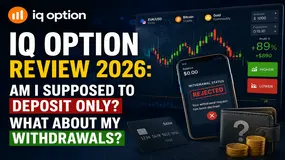
This is what many traders are asking while trading with IQ Option, an Antigua and Barbuda-based brokerage entity. Their wrath is evident through massive negative reviews on several broker review platforms. WikiFX, a widely recognized forex broker regulation inquiry tool, itself recorded over 120 complaints from users worldwide. The complaints largely highlight the alleged withdrawal denial by the broker. Users have deposited millions but allegedly failed to withdraw funds when they needed to. While they may just be allegations and not an established fact, they are worth looking at, considering a large volume of complaints pointing to a potential investment scam. In this IQ Option review 2026, we have examined several complaints while providing an overview of the company’s regulatory framework.
RoboMarkets shows a relatively stronger data profile than many high-risk brokers, with a WikiFX Score of 7.79, CySEC regulation, and an additional offshore Seychelles FSA registration. The main caution points are jurisdiction-specific authorization risk, one regulatory disclosure linked to Indonesia, limited login security features noted in the platform review, and mixed user exposure cases including price-gap and market-access complaints.
squaredfinancial shows a mixed risk profile: WikiFX lists a 6.51 score, regulation by ASIC and CySEC, and offshore supervision by the Seychelles FSA, but also reports 51 user complaints in the last three months. The strongest concern in the available data is not the trading environment score, but repeated exposure cases involving withdrawals, profit cancellation, account access, and slow or absent support.
FXTF has a relatively strong visible safety profile compared with many offshore brokers, with a WikiFX Score of 8.38 and regulation by Japan's Financial Services Agency. The main risk is not the stated license itself, but the mixed exposure record, including positive user feedback alongside serious allegations involving withdrawal obstruction and possible fake-platform or SNS-led fraud.
Pocket Option shows a high-risk profile on the supplied WikiFX data: a 1.74 score, no verified financial regulation listed, one Securities Commission Malaysia investor-alert disclosure, and heavy recent complaint volume. Some users praise the platform and low-entry trading, but the repeated reports of blocked accounts, delayed withdrawals, KYC disputes, and fund withholding make this broker unsuitable for traders who cannot absorb account-access or withdrawal risk.
Zenstox is offshore-regulated in Seychelles, yet user complaints describe blocked withdrawals, forced extra deposits, login access loss, and large withheld balances. The sharpest warning: one 2026 user says $61,000 was withheld while a $2,000 “clearance fee” was demanded.

Between 2024 and May 2026, Malaysians lost a combined RM5.37 billion to various forms of cybercrime, and a single category sits at the centre of this crisis: investment scams that never involved any real investment at all.
Many beginners struggle with entering trades too late because they rely on lagging indicators. This article explains how to combine short and long-term Moving Averages, use MACD for divergence, and read simple price patterns to catch trends earlier.
Trive holds active licenses in Malta and South Africa, but a surging volume of user exposure cases reveals severe patterns of blocked withdrawals and deducted profits. Indian traders should exercise extreme caution, as the practical risk of account locking currently overshadows the broker's formal regulatory status.
XTB is a regulated forex broker with a WikiFX Score of 6.94 and an AAA influence rating. The broker has multiple active licenses, but WikiFX also records regulatory disclosures and a high number of recent user complaints, especially around withdrawals, so traders should review its risk profile carefully.
This article explains the reality of scalping for beginner traders who are drawn to ultra-short-term trading. It breaks down the critical differences between scalping and day trading, the necessary components of a fast execution system, and how alternative charts like Renko and Heikin-Ashi help filter out market noise. The main takeaway is that scalping requires highly efficient platforms and disciplined risk control.
ARFX carries an FSCA regulatory record, but multiple 2025 user reports allege blocked or missing withdrawals, deducted funds, weak support, and app problems. The sharpest warning: regulation exists, yet traders still report money not reaching them.
ANGEL PRO FX is an unregulated broker with a very low WikiFX score of 1.22. It presents severe risk signals due to active complaints from Indian traders regarding blocked withdrawals and demands for additional upfront fees.
ForexDana is an unregulated broker operating with a critically low WikiFX score of 1.60. Recent complaints from Indian traders regarding uncredited deposits and unresponsive customer support indicate a very high risk for anyone considering this platform.
Imagine clicking on what appears to be a breaking news article from a reputable outlet, reading it through, and following a link to what looks like a legitimate trading platform, only to discover weeks later that none of it was real.
Most victims spend the first few days in a state of shock and disbelief, attempting to make sense of what happened rather than taking concrete steps. This is precisely what scammers rely on. While victims are frozen, criminal networks are moving. Wallet addresses are rotated. Fake platforms are taken offline. Evidence evaporates. In some cases, victims are even contacted again by the same syndicate, this time posing as recovery agents or tax officials who claim they can retrieve the lost funds, for a fee, of course. This second wave of fraud targets people at their most vulnerable and desperate.

This guide explains the early choices beginner Forex traders face, from deciding between standard and mini accounts to understanding leverage and broker spreads. It also introduces fundamental technical concepts like resistance levels and price breakouts. For Indian beginners, the main takeaway is to test strategies on a demo account and verify broker backgrounds before risking real capital.
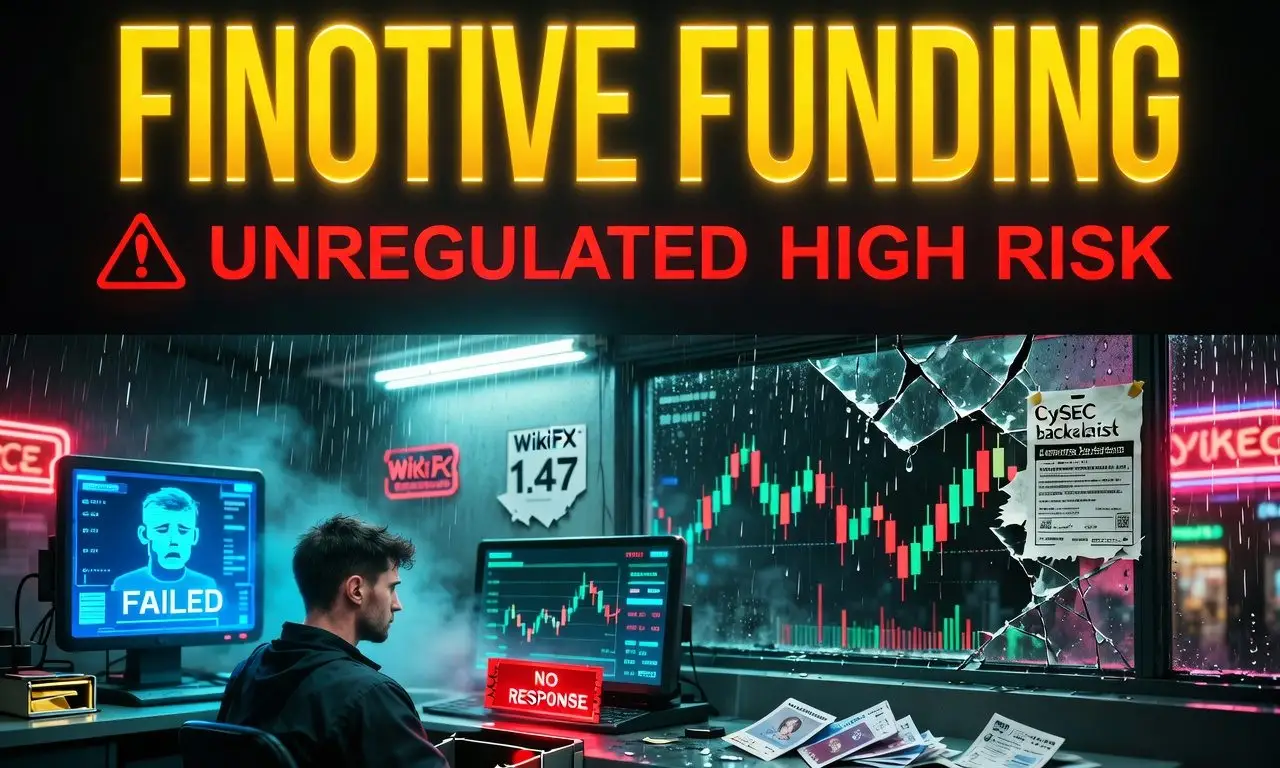
Finotive Funding has a WikiFX Score of 1.47 and is shown as unregulated, with one regulator disclosure warning recorded by CySEC. This review summarizes its safety profile, user feedback, and key risks based only on the provided WikiFX data and case reports.